CARE: Camera-Residual Reserves for First Sightings in Adaptive LiDAR Sensing
arXiv:2608.24282v1 Announce Type: cross Abstract: Adaptive LiDAR scanning concentrates a limited sensing budget on regions of interest predicted from past object tracks, lowering data volume in autonomous driving while maintaining detection accuracy. However, existing scanning policies face three challenges. First, history-driven approaches depend on past tracks, so unseen objects are detected late or missed. Second, random or uniform sampling outside the predicted regions has no awareness of w
Overview
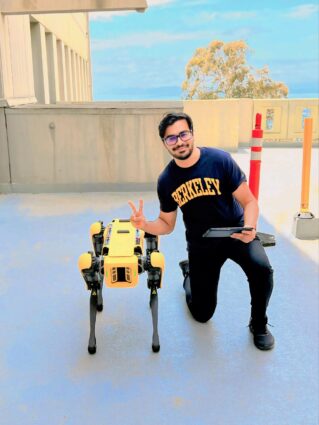
arXiv:2608.24282v1 Announce Type: cross Abstract: Adaptive LiDAR scanning concentrates a limited sensing budget on regions of interest predicted from past object tracks, lowering data volume in autonomous driving while maintaining detection accuracy. However, existing scanning policies face three challenges. First, history-driven approaches depend on past tracks, so unseen objects are detected late or missed. Second, random or uniform sampling outside the predicted regions has no awareness of where new objects appear. Third, camera-guided alternatives spend budget on all camera detections, resampling objects already covered, costing recall in crowded scenes and range when budgets are scarce. This paper introduces the CAmera-REsidual reserve (CARE), a training-free allocation rule that reserves part of a fixed ray budget for the directions of current camera detections that the track forecasts cannot explain; the rest follows the base history policy, and unused reserve returns to a random floor. The paper makes three contributions. First, a leakage-free ray-budget evaluation on nuScenes (150 scenes, 4,148 events) measuring the first-sighting loss of history-driven scanning, with a strict-causal variant using the preceding keyframe. Second, CARE raises first-sighting recall by 5.2, 5.2, and 4.3 points at 10%, 20%, and 35% budgets over the history policy, with paired intervals excluding zero; the camera cue drives this gain, and the first-sighting versus overall trade-off is a budget-dependent Pareto choice. Third, a safety-bounded forgetting module that releases budget from receding or static tracks beyond a speed-dependent guard distance; at tight budgets, forgetting without the guard significantly harms near-field recall, so the guard is what keeps it safe. The pipeline runs end to end on a real vehicle and, in closed-loop simulation, detects an occluded pedestrian earlier and brakes more reliably than history-driven scanning.
Source
Originally published at arxiv.org.
Related Articles
Source: https://arxiv.org/abs/2608.24282