Soft, robotic cells from morph embed physical AI into hardware
morph launched a physically intelligent soft robotics platform that designs and manufactures what it calls “soft robotic cells.” The post Soft, robotic cells from morph embed physical AI into hardware appeared first on The Robot Report.
Overview
By integrating reinforcement learning with high-fidelity physics-based simulation, morph said it enables a faster translation from concept to product. | Source: morph
As advances in AI have made robots smarter and more capable, some developers are increasingly focusing solely on the software element of intelligence. Robotics startup morph is taking a different approach, one that sees embodied AI as both a hardware and a software problem.
The London-based company embeds sensing and adaptive control directly into reconfigurable deformable materials, enabling real‑time change in morphology and stiffness. The result is soft cells that developers can integrate into a range of robots.
“We’re running real-time physical AI models that can take sensory information and understand it. Then the cells will morphologically change and adapt to affect a change, whether that’s motion, or whether that’s support, or whether that’s protection,” Dr. Jean Nehme, the founder of morph, told The Robot Report. “Whatever it is, we have sensing cells that are soft and able to receive and understand information, and then fundamentally adjust to effect change in shape to benefit a product or a value.”
morph strives to bridge gap between hardware and software
Inspired by the adaptability of octopuses, morph said it intends to accelerate the development of physical AI systems. Nehme asserted that the key is to bring together AI development and hardware.
morph’s robotic cells have intelligence embedded directly into the materials. This creates cells that can sense, adapt, and respond to the body and the environment in real time, said Nehme.
“I don’t believe that you can build robots with hardware separate, the physical, and AI separate. It just doesn’t work. I think it’s really hard to do right,” he said. “We’re not born with just hardware alone. We’re born with intelligence that learns.”
morph plans to build many different models and deploy them in different ways. In the long term, Nehme said he hopes to use these models to create a more generalizable world model.
“If you watch, whether it’s a puppy or it’s a tiny baby, you watch them learn and adapt. You can see how they’re trying to use a model that helps them think through, ‘How do I grip this?’” Nehme said.
“That integration is super important, and we’re doing that right from the front end,” he added. “We’re able to build design models, deploy models right into different form factors to effectuate change, and then to drop into those models a continuous learning loop. So, when we release something into the wild, it will continue to learn.”
Why focus on soft robotics?
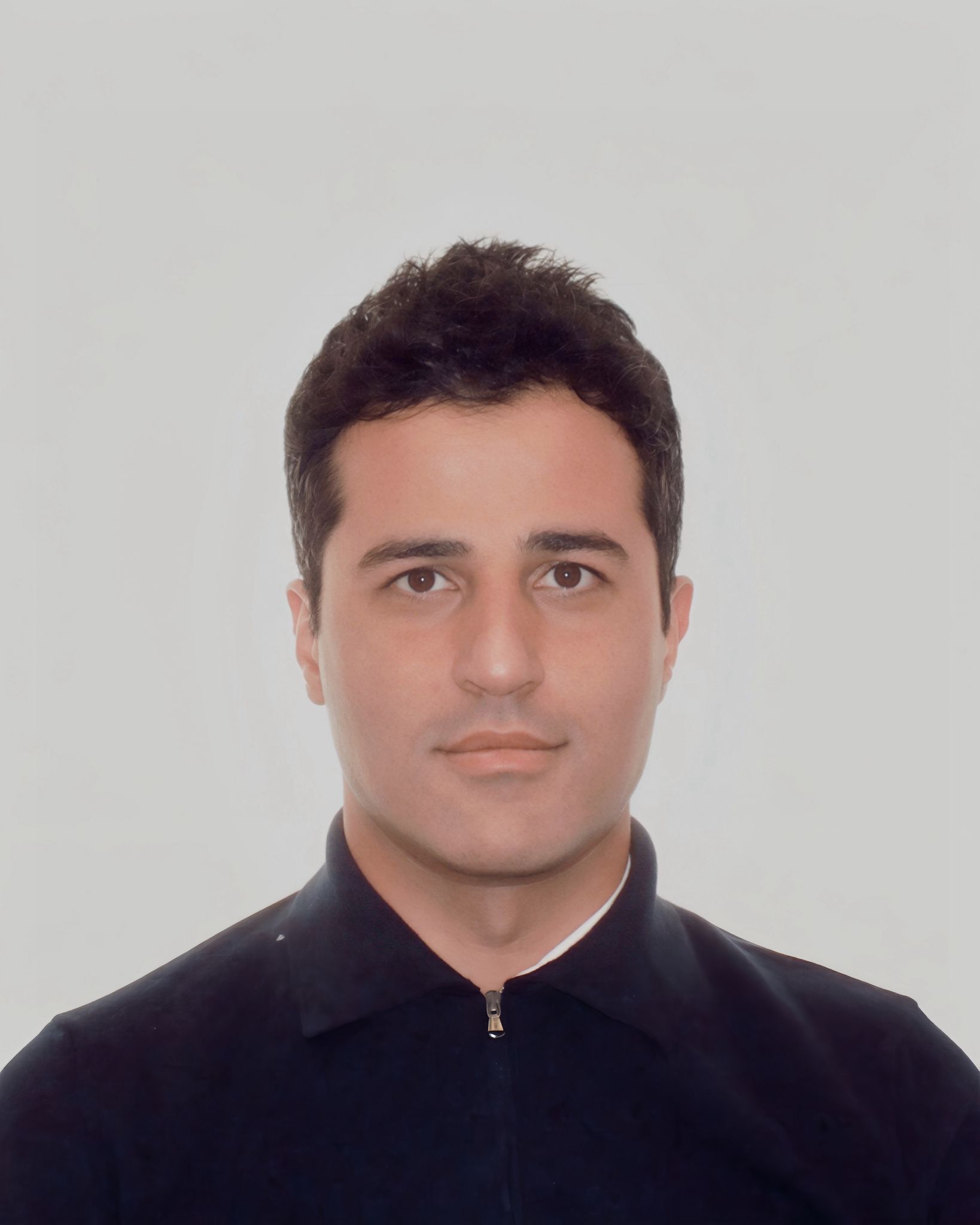
Dr. Jean Nehme is a former reconstructive surgeon who founded and exited the surgical AI company Digital Surgery. | Source: morph
morph is focused on working with soft, deformable materials that enable safer interactions with humans.
“We’ve taken this approach because we believe two things,” Nehme said. “One, we believe soft is a much more interesting approach to a problem that isn’t going to be just confined to industry warehouses.”
“I understand the concept of having humanoids do things in a warehouse,” he observed. “You’re going to have to do a lot with humanoids to make them much more ready for the wider world. Part of that, I think, is going to be soft integration in some way.”
Details
The second reason was for flexibility. “We think soft is highly adaptable and highly scalable. Manufacturing cost is going to be much more efficient, and we’re excited to deploy form factors that are going to be optimized for many different environments,” Nehme said.
There are also challenges that come with soft robots. Nehme said the material systems are very difficult to predict, especially compared with rigid systems. However, computational advances in recent years have opened the door to simulating and testing soft robotics.
“Before, trying to mathematically model fluid dynamics was super hard,” Nehme said. “Now, with more and more compute power that’s becoming available, and obviously thanks to all the big hyperscalers, the Googles and the NVIDIAs and others who are deeply investing in building out this level of infrastructure, you’re able to run really interesting compute models, which allow you to design deformable systems that are fluid-actuated. [You can] model them out, simulate them, test them, and then deploy models in ways that couldn’t exist before this level of compute.”
morph plans to work with other robotics developers
morph’s soft robotic cells can be placed into multiple products to better respond to human movement and interaction. With morph’s B2B strategy, the goal is to operate as a software, design, and fabrication partner, working with industries and companies to enable them with soft robotics technology.
“We’re looking for anyone who is working on a robotics problem that requires a deformable, soft component or a soft form factor,” Nehme said. “We’ve built a design engine. We’ve built a manufacturing stack and the ability to deploy and test models for that specific application.”
Initially, morph is focusing on healthcare applications. These include athletic performance, injury prevention, and mobility support. Over time, the programmable platform will scale across categories, including healthcare, automotive, and industrial safety, asserted Nehme.
“We’re excited to partner with folks across industries,” he said. “People can reach out to us; we’re a collaborative organization. We’re going to be working with as many people as possible, enabling them with the form factor design systems that we have.”
morph’s celebrity investor brings new perspectives to robotics
As morph emerged from stealth, it is backed by investors such as 8VC, Copper, Qubit Health Capital, Valia Ventures, and Blue Lion. Backers also include Harvey Spevak, chairman of Equinox Group, and musician Pharrell Williams.
“Pharrell is a very avid robotics fan and owns some robots,” Nehme said. “Outside of the song that we all know, I think he fundamentally does believe in investing in things that can make the world happier and better. He’s someone who I really enjoy spending time with, and we get a lot of time together, and he’s very involved in the business, and hugely supportive as an investor.”
Nehme claimed that influences from outside of the robotics industry are essential to creating successful robots.
“Fundamentally, I believe that innovation is a function of multiple people with different perspectives looking at a problem and sharing and discussing,” he said. “You have to have the outside views. To have real innovation, you have to be challenged. And to be challenged, you have to have someone come in and look at a problem with a very different lens and give you a different opinion.”
 Submit your session idea for the 2026 RoboBusiness
The post Soft, robotic cells from morph embed physical AI into hardware appeared first on The Robot Report.
Source
Originally published at www.therobotreport.com.
Related Articles
Source: https://www.therobotreport.com/soft-robotic-cells-from-morph-embed-physical-ai-into-hardware/