The Moving Eye: Enhancing VLA Spatial Generalization via Hybrid Dynamic Data Collection
arXiv:2607.02322v1 Announce Type: new Abstract: Vision-Language-Action (VLA) models have shown remarkable promise in generalized robotic manipulation. However, their spatial generalization remains fragile. We argue that simply increasing the number of viewpoints is insufficient. Models often fall into the trap of Shortcut Learning, latching onto spurious correlations (e.g., fixed relative poses between objects or between the camera and robot base) rather than learning true spatial relationships
Overview
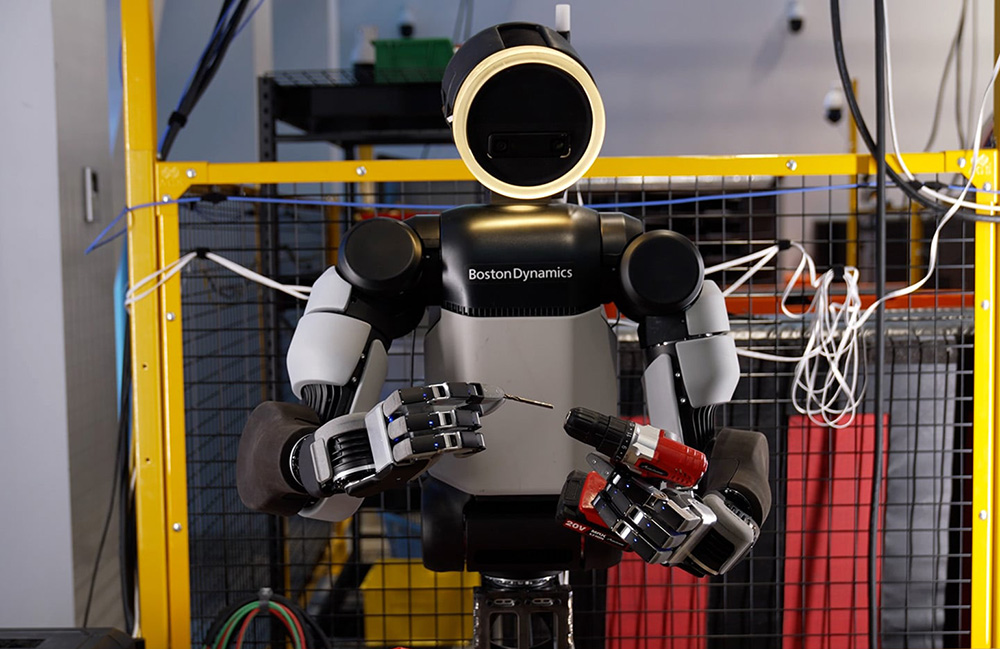
arXiv:2607.02322v1 Announce Type: new Abstract: Vision-Language-Action (VLA) models have shown remarkable promise in generalized robotic manipulation. However, their spatial generalization remains fragile. We argue that simply increasing the number of viewpoints is insufficient. Models often fall into the trap of Shortcut Learning, latching onto spurious correlations (e.g., fixed relative poses between objects or between the camera and robot base) rather than learning true spatial relationships. In this work, we propose a data-centric solution to enhance VLA spatial generalization. We utilize a dual-arm setup where one arm performs manipulation while the other serves as a mobile environmental camera. We systematically evaluate three data distribution patterns: Fixed, Multi-Fixed, and Moving Views. Our findings reveal that a hybrid strategy, combining continuous camera motion with diverse static viewpoints, yields the best performance by substantially reducing spurious correlations while maintaining training stability. Our experiments demonstrate that this strategy mitigates spurious correlations, enabling VLAs to generalize to unseen camera poses and object configurations where simply adding more static viewpoints fails. Crucially, we reveal that the susceptibility to shortcut learning and the struggle with spatial generalization are universal characteristics shared across diverse architectures. Consequently, all evaluated models (ACT, Diffusion, and VLA models including Pi0 and Gr00t) benefit significantly from our mixed data strategy.
Source
Originally published at arxiv.org.
Related Articles
Source: https://arxiv.org/abs/2607.02322