Why outdoor robots fail (and how to build systems that survive)
Learn practical strategies for building reliable outdoor robots from WiBotic, Burro, and Nextpower at RoboBusiness in Silicon Valley. The post Why outdoor robots fail (and how to build systems that survive) appeared first on The Robot Report.
Overview
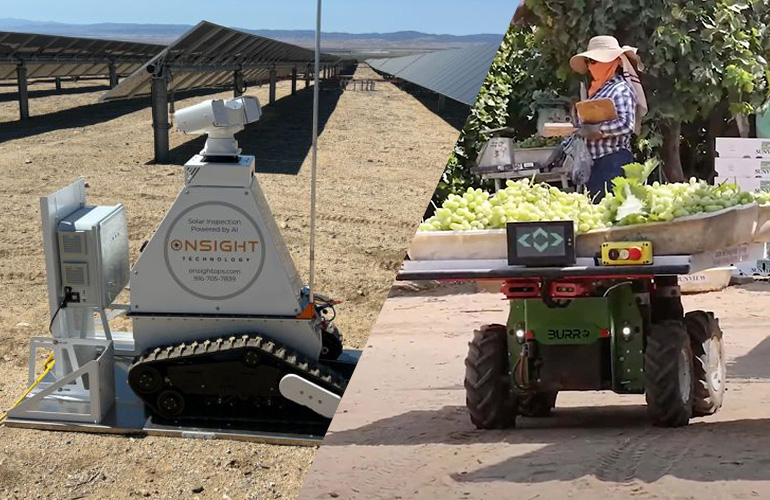
Outdoor robots demand additional engineering, sensors, and weatherproofing to operate effectively outdoors. | Credit: Wibotic, Nextpower, and Burro.
Robots are now being deployed far beyond the controlled conditions of warehouses, factories, and laboratories. From agriculture and construction to mining, ports, defense, and critical infrastructure, outdoor robots must contend with weather, dust, moisture, vibration, uneven terrain, remote deployments, and limited access to service teams.
Those conditions introduce failure modes that rarely appear during early prototyping or lab testing. A design that performs well indoors may struggle once it faces temperature swings, water ingress, clogged connectors, battery constraints, charging challenges, inconsistent connectivity, and the continuous mechanical stress of real-world operations.
At RoboBusiness 2026, the session “Lessons Learned: Building Reliable Outdoor Robots” will address these issues head-on. This panel is scheduled for Oct. 21 from 2:15 to 3:00 p.m. PT.

Meet the experts in outdoor robots
Ben Waters, co-founder and CEO of WiBotic; Vibhor Sood, co-founder and vice president of engineering at Burro; and Derek Chase, vice president of robotics and AI at Nextpower, will join Mike Oitzman, senior editor at The Robot Report, for a discussion focused on the engineering decisions that determine whether outdoor robots succeed in production.
The panel will explore best practices for environmental hardening, power architecture, autonomous operations, charging infrastructure, reliability engineering, and long-term fleet maintenance.
Details
Attendees will hear real-world deployment lessons that connect engineering choices to uptime, operational efficiency, service costs, and total cost of ownership.
For robotics engineers, product leaders, operators, and business executives, the session offers a candid look at what it takes to move outdoor robots from pilot projects to dependable field deployments. Whether your team is developing mobile robots for farms, worksites, infrastructure inspection, logistics yards, or other demanding environments, this discussion will provide actionable guidance for improving system resilience.
If your organization is building or evaluating robots for outdoor operations, this is a session you will not want to miss.
Join the conversation at RoboBusiness 2026 to learn from teams that have tackled the realities of field robotics, and come away with practical strategies for building more reliable, rugged, and cost-effective robotic systems.
 Register now and help us celebrate 20 years of RoboBusiness!
The post Why outdoor robots fail (and how to build systems that survive) appeared first on The Robot Report.
Source
Originally published at www.therobotreport.com.
Related Articles
Source: https://www.therobotreport.com/why-outdoor-robots-fail-how-to-build-systems-that-survive/